
Introduction
Every year on August 19, photographers around the world celebrate World Photography Day. For me, this year feels like a good opportunity to look back at where photography came from and how my own journey behind the camera has developed.
Photography started as an attempt to preserve an image created by light. Almost two centuries later, it has become much more than that. It allows us to capture moments, explore places, tell stories, and express ideas through images.
My own journey began for a very different reason. I started photography hoping that one day I could earn a living from it. While that hasn’t happened yet, photography has given me something I didn’t expect when I first picked up a camera.
To celebrate World Photography Day, I want to look back at how photography began, reflect on my own journey as a photographer, and share my ten favorite photos taken or edited over the past year.
What is World’s Photography Day?
World Photography Day began with a simple problem: How do you make an image created by light stay there?
For centuries, people already understood the concept of the camera obscura. Light passing through a small hole into a dark space could project an image of the outside world. The problem was that the image couldn’t be preserved. Once the light disappeared, so did the image.
In the 1820s, Nicéphore Niépce approached this problem using a substance called bitumen of Judea, which hardened when exposed to light. Through this process, known as heliography, Niépce created some of the earliest permanent photographic images.
Niépce later worked with Louis Daguerre to improve the process. After Niépce’s death, Daguerre continued experimenting and eventually developed the daguerreotype, a more practical photographic process.
On August 19, 1839, the daguerreotype process was publicly presented in Paris after the French government acquired the rights to the invention. This date would later become the reason World Photography Day is celebrated every year on August 19.
Today, World Photography Day celebrates how far photography has come. But for photographers, it can also be an opportunity to look back—not only at the origins of photography, but also at their own journey behind the camera.
My Journey as a Photographer
My journey as a photographer began with a simple reason. I wanted to earn a living from it.
At the time, I was looking for additional ways to make money doing something I genuinely enjoyed. I considered stock trading, programming, and becoming a content creator. Eventually, photography came to mind.
However, as I ventured further into photography, it became something more than a potential source of income. I began to understand myself better and enjoy things I never expected to enjoy. Traveling overseas, exploring new places, searching for compositions, and crafting the best image I could all became part of the experience.
Eventually, photographs became more than visually pleasing images. I started using them to express my ideas, perspectives, and parts of who I am.
Today, even though I still haven’t earned a single penny from photography, that no longer defines why I continue. Photography has become my personal safe zone—a place where I can explore and express my ideas through images, then share them through my personal website.
My Top Ten Photos This Year
To celebrate World Photography Day, I decided to look back at my ten favorite photos taken or edited this year.
10. Mt. Sumeru Behind Tumpak Sewu Waterfall

Indonesia offers a wide range of landscapes for photography, from the Milky Way and mountains to waterfalls and volcanoes.
Sitting at number ten is Tumpak Sewu Waterfall, surrounded by green scenery with Mt. Semeru appearing in the distance. The combination of the waterfall, greenery, and mountain creates a calm and natural scene.
For this image, I centered the waterfall and used the surrounding trees to frame it while leaving a hint of Mt. Semeru in the background. During editing, I increased the saturation of the trees to make the scenery more lively and darkened the lower-left area to draw more attention towards the waterfall.
Although I truly appreciate this scene, I believe it would be even stronger when photographed with a drone. From a higher viewpoint, Mt. Semeru can sit directly above the waterfall, creating a stronger relationship between the two subjects.
9. The Natural Scenery at Mt. Kawah Ijen

Initially, Kawah Ijen didn’t strike me as a photographic location. It is one of Indonesia’s major tourist attractions, particularly known for its blue flames. However, from a photography perspective, the blue flames didn’t interest me that much.
That changed when I visited Kawah Ijen.
What caught my attention was the landscape itself. The irregular-shaped branches give the scene a unique character, while the acidic lake complements the surrounding mountains surprisingly well.
For this image, I chose the mountain as the main subject and used the branches as leading lines pointing towards it. I also used the branches to loosely frame the scene while including the acidic lake and surrounding landscape to capture what makes Kawah Ijen unique.
Ideally, I would photograph this scene during sunset. Unfortunately, the area opens at 2 a.m. and closes at noon, making evening light impossible to capture. Even without the ideal lighting conditions, however, the scenery was well worth the walk.
8. Trains Passing Through the Waterfall Vortex

The Jewel Rain Vortex is one of the must-visit attractions in Singapore. What makes it interesting to me is how it combines nature, architecture, and infrastructure within the same space.
For this image, I waited for the moment when both trains were passes the waterfall. The trains add a sense of movement to the scene while strengthening the contrast between the natural elements and Singapore’s modern infrastructure.
During editing, I enhanced the greenery slightly to make the scene more lively and bring more attention to the natural elements surrounding the waterfall. Together, the waterfall, trees, architecture, and moving trains represent how nature and infrastructure are integrated within Singapore.
7. The Giant Swing Within the City

There are many ways to photograph the Giant Swing. However, this particular composition is less common because it was taken from a semi-restricted area. From this viewpoint, I was able to combine the Giant Swing with Bangkok’s wider cityscape.
For this image, I positioned the Giant Swing on the left-hand side and used the main road as a leading line towards it. The light trails strengthen this direction while adding movement to the city. Ideally, I would have included more of Wat Suthat in the frame. However, doing so would introduce a large pole into the composition, drawing attention away from the Giant Swing.
During editing, I gave the image a warmer tone. The golden-hour light, temples, and surrounding buildings are mostly orange, while the Giant Swing remains red. These colors work well together while allowing the Giant Swing to stand out. I also darkened the trees slightly to reduce distractions around the main subject allowing the rest of the composition to remain in harmony.
6. Skytrain Passing through the Lego Building

The Mahanakhon building is one of Bangkok’s most recognizable landmarks. While its exterior makes it stand out from other buildings, finding a clean composition that clearly shows its unique shape can be difficult.
Eventually, I found a viewpoint that allowed me to capture the building without too many distracting elements. However, access to this area is limited, making this particular composition more difficult to capture.
For this image, I chose the BTS Skytrain as the main subject, with Mahanakhon as the main background element. The contrast in color draws attention towards the train first, while the building remains clearly visible behind it. From this angle, Mahanakhon’s distinctive shape is also shown clearly without overwhelming the composition.
5. Sunset at The Marble Temple

Unlike some of the previous locations, the Marble Temple is relatively easy to access. However, creating a strong composition of the temple can be surprisingly difficult.
Symmetry plays an important role in this image. The challenge is that the temple is quite tall while the shooting position is relatively close. To include the entire structure, I had to tilt the camera upward, creating perspective distortion that required hours of adjustment during editing.
For the final image, I slightly brightened the temple while darkening the surrounding areas to draw more attention towards it. I also worked mainly with red, orange, and yellow tones to create a softer and more consistent look.
Most importantly, the elements within the composition point towards the temple. The red gates lead inward from both sides, while the reflection leads towards the temple from below. Together with the yellow roof, these elements keep the viewer’s attention on the temple while maintaining a clean composition.
4. Bangkok’s New Year 2026

For a long time, I wanted to capture Bangkok’s cityscape together with fireworks. The challenge was finding the right location. Many viewpoints either have restricted access or don’t provide a composition that works well with the fireworks.
This image became my first proper attempt at fireworks photography. With the fireworks as the main subject, the Chao Phraya River and Bangkok’s cityscape provide the surrounding context, turning the image into a scene that represents New Year in Bangkok.
For the final image, I stacked multiple fireworks exposures together to create a fuller display and bring out more of their colors. I also darkened the surrounding areas to direct attention towards the fireworks while keeping enough detail in the cityscape to preserve the atmosphere of Bangkok.
3. The Futuristic Bangkok

This image was taken from one of the restricted areas in Bangkok. I chose it as my third favorite photo this year not only because of its storytelling, but also because of the shooting and editing techniques required to create it.
In a way, this image represents what Bangkok is today and what it may become in the future. Modern shopping malls, BTS Skytrains, artificial gardens, and surrounding infrastructure all come together within one scene. Hence the name: The Futuristic Bangkok.
Capturing three BTS Skytrains at exactly the same time was nearly impossible. Instead, I spent hours photographing the same scene as trains passed from three different directions. I then merged the exposures together, experimenting with different combinations until the final image looked natural.
During editing, I gave the image a slightly cooler tone to strengthen its futuristic atmosphere and complement the modern cityscape.
Although I don’t consider this the best image in my collection, it is one of the most important photos I created this year. The process pushed me to experiment with more advanced shooting and editing techniques, improving my skills as a landscape photographer.
2. The Beauty of Chaos

I consider myself an introvert who enjoys stillness. Naturally, I prefer places without too much chaos. While cars, modern buildings, and shopping malls provide comfort and convenience, they also make the city feel busier.
Because of this, I often struggled to see chaos itself as something beautiful.
That changed when I encountered this scene.
The Beauty of Chaos represents what I see as the heart of Bangkok today: modern, convenient, but chaotic. There is a lot happening within the frame, yet instead of turning away from it, I found myself attracted to the scene.
There are also imperfections within the image. The Citi and LINEMAN signs draw attention away from Terminal 21 and would normally be considered distractions. However, I decided to keep them because they are also part of modern Bangkok. The advertisements, traffic, buildings, and visual distractions all contribute to the chaos I was trying to capture.
In this case, the imperfections became part of the story.
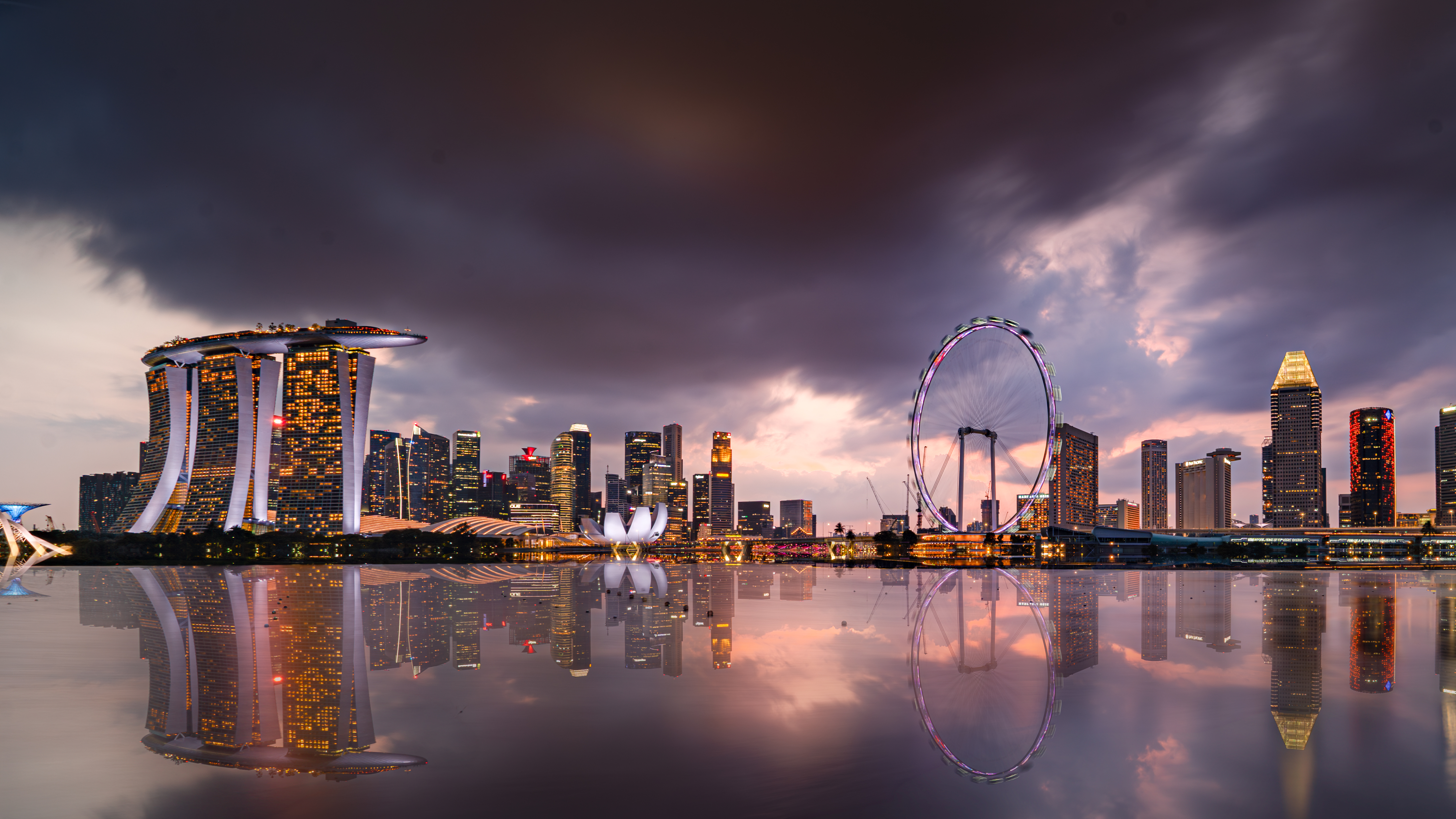
1. Calmness Within the City

Working as a manager in a city, I constantly face problems from different directions. Over the years, I began wanting something different: a quieter and simpler way of living. Because of this, I often found myself enjoying less developed areas where life seemed more peaceful.
That mindset changed when I visited Singapore.
Singapore is one of the most developed countries in the world. Yet during my time there, it also felt like one of the calmest places I had visited. It made me realize that development and peacefulness don’t necessarily have to work against each other.
This photo represents that realization. Iconic landmarks such as the Singapore Flyer, Marina Bay Sands, and ArtScience Museum represent Singapore’s development, while the reflective water creates a sense of calmness. Even under the stormy weather, the scene still feels peaceful.
Seeing this made me realize one thing:
Peace is not determined by where we live. It comes from the way we choose to see the world.
Calmness Within the City is by far my favorite image this year. It represents both myself and my future goal: to live a simple and peaceful life while embracing technology and development.
Conclusion
Photography has come a long way since people first tried to make an image created by light permanent. What began as a technical challenge has become a way for people to capture moments, tell stories, and express how they see the world.
My own journey has changed in a similar way. I started photography with the simple goal of earning additional income. Yet somewhere along the way, that goal became less important. I began traveling more, appreciating places differently, and using photography to express ideas that are sometimes difficult to put into words.
Looking through my favorite photos this year made me realize how much my perspective has changed. Some images taught me new techniques. Others changed the way I looked at a scene. And a few, especially Calmness Within the City, represent something much more personal.
I still don’t know where photography will eventually take me. Maybe one day it will become another source of income, or maybe it will remain something I simply enjoy doing.
Either way, I now have a reason to keep picking up the camera.
Photography started as something I wanted to earn from. It became something I learned from.
Disclosures
AI tools were used to assist with outlining, clarification, and editing suggestions.
All ideas, interpretations, and final writing decisions are my own.
References
Harry Ransom Center. “The Niépce Heliograph.” The University of Texas at Austin. https://www.hrc.utexas.edu/niepce-heliograph/
Leave a Reply